Rabbits are intelligent and social companions that thrive with proper care. Providing the right nutrition, housing, grooming, exercise, and preventive measures ensures they live healthy, comfortable, and active lives. This guide covers all the essentials you need to create a safe and enriching home for your bunny.
1. Nutrition Essentials
Overfeeding pellets and underestimating hay intake are common issues that affect rabbit health.
Key Nutritional Considerations
- Hay first: Unlimited high-quality grass hay (timothy, meadow, or orchard) is the foundation of a healthy diet for adult rabbits. Alfalfa hay is typically reserved for babies, nursing mothers, or seniors because of its higher calcium and calorie content. Hay supports digestion, prevents gastrointestinal issues, and naturally wears down teeth.
- Pellets wisely: Offer controlled portions of high-fiber, low-calorie pellets appropriate for your rabbit’s age and size. Avoid mixes with seeds or sugary treats, which can lead to obesity or digestive upset.
- Fresh vegetables & greens: Provide a daily variety of leafy greens like romaine, parsley, and cilantro. Introduce new vegetables gradually to prevent stomach upset and encourage healthy eating habits.
- Cecotropes: Rabbits naturally produce soft night droppings called cecotropes, which they re-ingest to obtain essential nutrients. This is normal and crucial for digestion — not a sign of diarrhea.
- Hydration & modern solutions: Fresh water is crucial for digestion, organ function, and overall vitality. Rabbit water bottles or small filtered fountains keep water clean, moving, and more enticing for your pet, encouraging consistent drinking.
2. Housing & Comfort
Rabbits need more than a cage — they require a spacious, safe, and enriched environment.
Key Housing Essentials
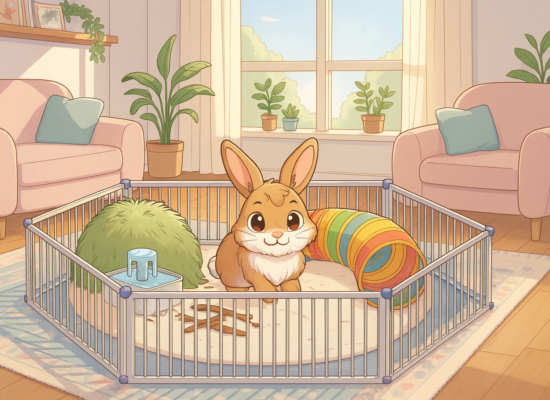
- Spacious enclosures: Rabbits need plenty of room to hop, stretch, and hide. For a pair, a recommended minimum is approximately 3m x 2m x 1m, though bigger is always better.
- Soft bedding & nesting: Use dust-free hay, straw, or paper-based bedding. Add nesting boxes for comfort, stress reduction, and a secure place to rest.
- Safe placement: Keep the enclosure away from drafts, direct sunlight, and household hazards. Ensure protection from other pets and potential dangers.
- Multi-level or play areas: Platforms, ramps, and tunnels encourage jumping, climbing, and exploration, which help maintain physical fitness and curiosity.
3. Grooming & Hygiene
Even self-grooming rabbits benefit from routine care to prevent health issues.
Key Grooming Practices
- Brushing routines: Brush short-haired rabbits weekly and long-haired or angora breeds daily to prevent mats, remove loose fur, and reduce hair ingestion that can cause digestive blockages.
- Nail care: Trim nails every 4–6 weeks to prevent overgrowth and discomfort.
- Litter hygiene: Clean litter boxes daily and use dust-free litter to maintain cleanliness and reduce odors.
- Health checks: Examine eyes, ears, teeth, and fur regularly. Early detection of abnormalities prevents serious problems.
4. Exercise & Enrichment
Daily activity prevents obesity, supports digestion, and keeps rabbits agile.
Best Exercise & Play Strategies
- Daily free-roam time: Allow 2–4 hours of supervised, safe exploration outside the enclosure.
- House-proofing warning: Rabbits are notorious chewers. Ensure all electrical cords, wires, and toxic houseplants are protected or removed to prevent injury.
- Tunnels, platforms, and hideaways: Provide climbing and hiding spaces to encourage natural behaviors like hopping and burrowing.
- Interactive toys: Chew sticks, puzzle feeders, and cardboard boxes stimulate problem-solving and provide safe chewing options.
5. Safety & Preventive Care
Proactive measures keep rabbits healthy and reduce the risk of illness.
Core Safety Measures
- Spaying/neutering: Desexing prevents uterine cancer in females, reduces aggression, and makes litter training easier.
- Vet checkups: Schedule annual examinations with a rabbit-savvy veterinarian to monitor teeth, digestive health, and overall wellness.
- Parasite control: Regularly check for fleas, mites, or ticks, especially if your rabbit has outdoor access.
- Hazard prevention: Keep toxic plants, cords, and small objects out of reach.
- Behavior monitoring: Watch for changes in appetite, droppings, or activity levels — subtle shifts often indicate early health concerns.
Final Thoughts
Caring for a rabbit is straightforward when you focus on the essentials. Providing high-quality nutrition, spacious housing, regular grooming, safe daily exercise, and preventive health care ensures your bunny stays healthy, active, and comfortable. Following these guidelines helps your rabbit thrive and live a long, happy life in your home.